
Daily Schedule for Senior Citizens to Live a Healthier Lifestyle
As people age, maintaining a structured and balanced routine becomes essential for physical health, mental well-being, and emotional stability. A well-planned daily schedule for senior citizens helps improve energy levels, manage health conditions, and bring a sense of purpose to everyday life. The goal is not to stay busy all the time, but to create a calm, active, and fulfilling lifestyle.
This article outlines a simple and realistic senior citizen daily routine that supports a healthier and happier life.
Why a Daily Schedule Is Important for Senior Citizens
A consistent routine helps seniors stay active, independent, and mentally engaged. It also supports better sleep, digestion, and emotional balance.
Benefits of following a daily routine include:
- Improved physical mobility
- Better mental clarity and memory
- Reduced stress and anxiety
- Improved sleep quality
- Stronger sense of independence
- daily schedule for senior citizens
A structured day brings comfort and stability, especially after retirement.

Morning Routine: A Calm and Active Start
Wake Up at a Fixed Time
Waking up at the same time every day helps regulate the body clock. Senior citizens benefit from a calm, unhurried start to the daMy accounty.
Hydration and Personal Care
Drinking a glass of warm water in the morning supports digestion and hydration. This can be followed by brushiwww.healthline.comng, bathing, and light grooming, which promotes freshness and confidence.
Light Physical Activity
Gentle movement keeps joints flexible and improves circulation.
Recommended morning activities:
- Slow walking
- Stretching or yoga for seniors
- Breathing exercises
These activities form the foundation of a healthy lifestyle for seniors.
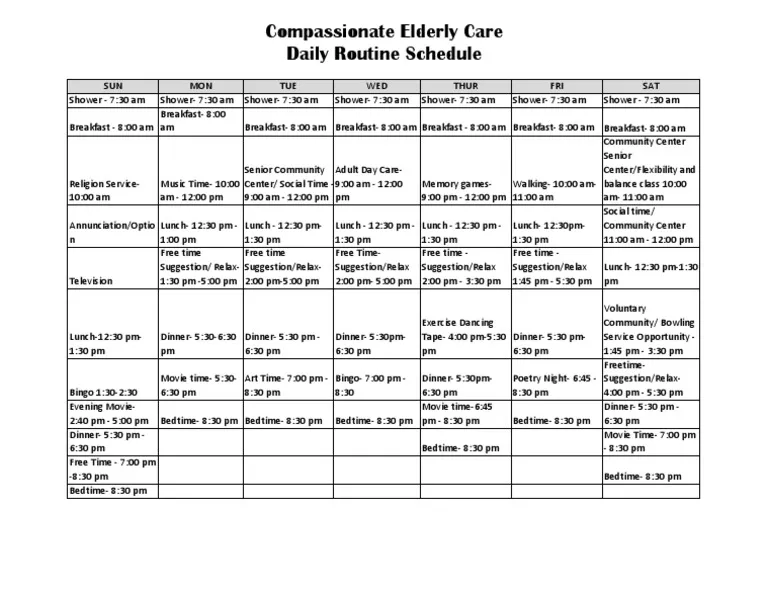
Healthy Breakfast and Medication Routine
A nutritious breakfast provides energy and supports overall health.
A balanced breakfast may include for
daily schedule for senior citizens
- Whole grains
- Fruits
- Dairy or plant-based protein
- Low sugar and low salt options
Medications, if prescribed, should be taken on time as advised by a healthcare provider. Maintaining a routine helps avoid missed doses.
Mid-Morning: Mental Engagement and Hobbies
Mental stimulation is just as important as physical activity. Engaging the mind helps maintain memory and cognitive health.
Healthy mid-morning activities include:
- Reading newspapers or books
- Solving puzzles or crosswords
- Gardening
- Listening to music
Hobbies bring joy and make the daily routine for elderly more meaningful.
Lunch and Rest Time
Balanced Lunch
Daily schedule for senior citizens Lunch should be light yet nutritious to avoid fatigue.
A healthy lunch includes:
- Vegetables
- Lean protein
- Whole grains
Avoid heavy, oily, or overly spicy foods.
Short Rest or Nap
A short nap of 20–30 minutes helps restore energy without affecting nighttime sleep.
Afternoon: Social Interaction and Light Activity
Social connections play a major role in emotional well-being.
Afternoon activities may include:
- Talking with family or friends
- Community walks
- Visiting neighbors
- Light household tasks
Staying socially connected reduces loneliness and supports mental health.
Evening Routine: Relaxation and Reflection
Light Evening Snack
A light snack such as fruits, nuts, or warm milk is ideal. Avoid heavy meals late in the evening.
Leisure Activities
Evenings should be calm and stress-free.
Suggested activities:
- Watching television in moderation
- Listening to devotional or soothing music
- Light stretching
This phase helps the body prepare for rest.
Dinner and Bedtime Routine
Dinner should be eaten early and kept light to support digestion for
daily schedule for senior citizens
Dinner tips:
- Eat at least 2–3 hours before bedtime
- Avoid fried and processed foods
- Drink water in moderation
Before bed, practicing relaxation techniques or light reading can help improve sleep quality.
Healthy Habits to Support the Routine
To make the senior citizen lifestyle healthier:
- Stay hydrated throughout the day
- Attend regular medical checkups
- Maintain a positive mindset
- Avoid excessive screen time
- Follow safety measures at home
Small habits practiced consistently create long-term benefits.
Conclusion
A well-structured daily schedule for senior citizens promotes a healthier lifestyle by balancing physical activity, mental engagement, nutrition, and rest. This routine supports independence, emotional well-being, and overall quality of life. With simple, consistent habits, senior citizens can enjoy their days with comfort, dignity, and purpose.
Leave a Reply